
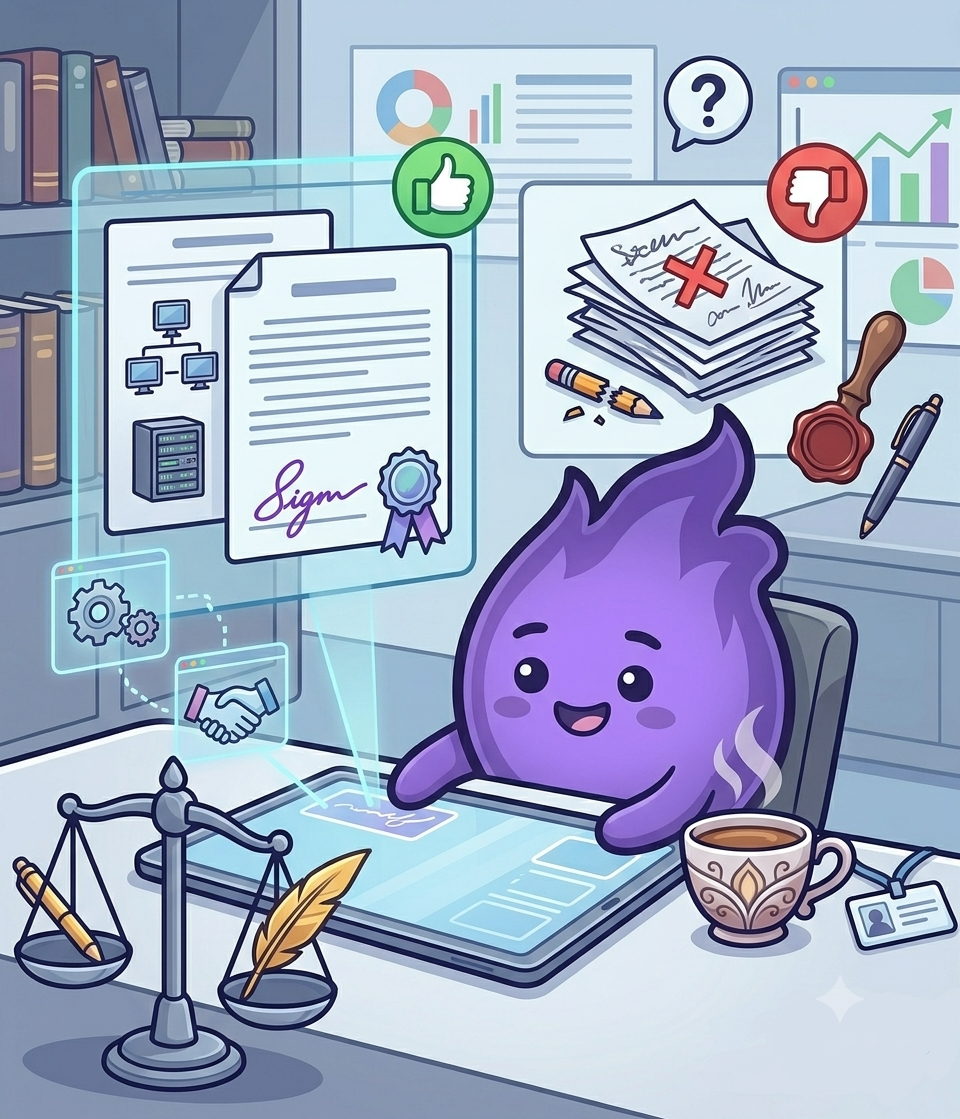
When is an electronic signature good enough in a trial?
An electronic signature is more than a button click. For it to hold up in a clinical trial context, it needs to be legally recognised, auditable, and understandable to the participant completing it. Those three things do not always come automatically from the platform you are using, and it's worth being honest that "the platform says it supports eSignatures" answers none of them on its own.
Question 1: Is it legally recognised where your study runs?
In most jurisdictions, electronic signatures are legally binding. But "most" is doing a lot of work in that sentence, and the requirement changes depending on where a participant happens to be sitting.
| Jurisdiction or context | What actually governs it |
|---|---|
| European Union | eIDAS defines tiers of eSignatures, from simple to qualified, with different legal weight attached to each |
| United States | FDA 21 CFR Part 11 sets specific technical and procedural requirements for clinical systems |
| Some countries and ethics boards | Handwritten signatures are still required for consent forms regardless of what the platform technically supports |
The action here is to confirm what your local ethics board and regulatory authority actually require, per country, before go-live. That confirmation needs to happen at study setup and again at every new site added, not assumed to carry over automatically.
Question 2: Is it auditable?
A compliant eSignature captures more than the fact that someone clicked a button:
- Who signed (verified identity, not just a username)
- When they signed (accurate timestamp)
- What version of the document they saw
- What authentication method was used (password, SMS code, or similar)
Without this audit trail, what you have is a record that someone clicked something. That is not the same thing, and it's exactly the failure mode that's been showing up in regulatory audits for years: missing dates, missing signatures, and consent records nobody can fully reconstruct after the fact.
Question 3: Does it make sense to the participant?
The user experience matters here, not just for ethical reasons but for validity. If a participant is unclear about when they are being asked to sign, does not understand the legal terms on the page, cannot access the signature screen on their device, or has no way to download or revisit what they signed, then the process is failing regardless of whether the backend is technically compliant. Uninformed consent is not valid consent, no matter how clean the audit trail looks afterwards.
This is also the question with the most evidence behind it. A systematic review covering 37 publications and over 13,000 participants compared eConsent directly against paper-based consenting on comprehension, acceptability, and usability. Not one of the included studies found paper performed better. Among the studies with the strongest methodology, eConsent produced significantly better participant understanding, higher satisfaction, and higher usability scores. Interestingly, the review also found that eConsent tended to take participants longer to complete than paper, which the authors read as a sign of deeper engagement with the content rather than a drawback. A signature process that takes a little longer because someone is actually reading it is doing its job.
What good looks like in practice
Pulling the three questions together, a well-run eSignature process tends to share the same handful of habits:
- Confirm regulatory fit before go-live, per region, not just once at study setup
- Use platforms that generate full audit trails automatically, without relying on staff to fill in the gaps manually
- Pair the signature step with plain-language explanations of what is being agreed to, not just a link to the full legal document
- Allow participants to preview and download what they signed, at any point, not only at the moment of signing
- Let the signing process take as long as it genuinely needs to, rather than optimising for speed over comprehension
That last point runs against the instinct to make everything frictionless. But the research is fairly clear that a slightly longer, better-understood consent process beats a fast one that leaves gaps in what the participant actually took in.
A signature is a point of trust. Whether digital or physical, it should feel deliberate, traceable, and understood by the person completing it. Get those three things right, and the legal and audit requirements tend to follow naturally rather than needing to be bolted on afterwards.