
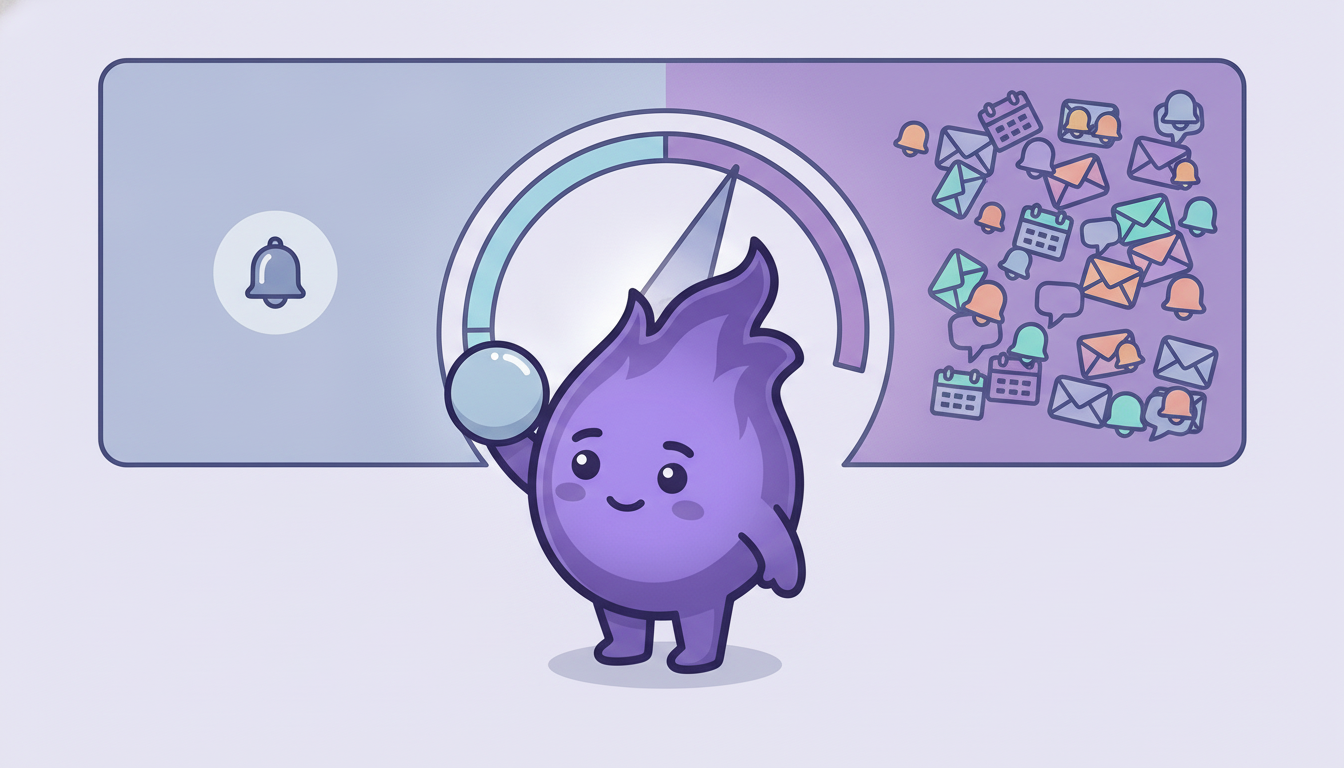
Push notifications in participant-facing apps
Push notifications are often treated as a technical feature to be configured once and left alone. In practice, they are one of the most frequent touchpoints a participant has with a study. How they are written, timed, and managed has a direct effect on completion rates, engagement, and how participants feel about being involved, and it's one of the few pieces of the participant experience that a study team touches almost every single day of a long-running trial.
A factorial randomised controlled trial run within the Electronic Framingham Heart Study put this to a real test, randomising 655 participants across personalised versus standard notifications, weekend versus weekday delivery, and morning versus evening timing, then measuring whether they actually transmitted their blood pressure and heart rate data afterwards. Personalisation made a clear, measurable difference: 38.9% of participants receiving personalised messages sent blood pressure data at three months, compared with 28.8% receiving standard ones, a gap that widened further by six months. The scheduling factors made almost no difference at all. Weekend versus weekday and morning versus evening produced no statistically significant change in either direction.
Helpful versus intrusive
The difference is usually specificity and relevance. Compare these two notifications doing the same job:
- "Hi Jamie, your Day 7 diary is ready to complete."
- "Reminder: complete task."
The first respects the participant's context. It tells them exactly what is expected, when. The second is generic enough to feel like an automated system firing without any knowledge of who they are or what day it is. It's essentially the standard-versus-personalised comparison from the Framingham trial played out at the level of message wording, and the trial evidence suggests the first version isn't just nicer, it's measurably more effective.
Other examples that work well:
- "Reminder: you have a video visit at 2pm today."
- "Just a heads-up, tomorrow is your final check-in for this phase of the study."
These feel considered. They are more likely to prompt action rather than being swiped away.
How notification fatigue develops
Participants have varying tolerance for digital messages, and that tolerance decreases over a study's duration. Common patterns that accelerate fatigue:
- Daily reminders for tasks that are not actually urgent
- Notifications arriving outside reasonable hours
- The same message appearing word-for-word, day after day
- Alerts that arrive immediately after a participant has just completed something
Once someone starts ignoring notifications, it is hard to recover. They may keep the app but tune out the channel entirely.
Building a smarter notification strategy
Treat notification planning as part of the study design, not an afterthought:
- Match frequency to urgency: fewer reminders for passive data collection tasks, more for time-sensitive events like visits or consent steps
- Use specific language tied to the study day or task name, not generic action prompts
- Personalise where possible, even a first name and a specific reference to where they are in the study makes a real, measurable difference, per the trial evidence above
- Offer participants some control over their notification preferences, since this reduces dropout and prevents the feeling of being micromanaged
- Don't over-invest in fine-tuning delivery time. The Framingham trial found weekday, weekend, morning, and evening delivery performed about the same, which suggests the effort spent obsessing over the perfect send time is often better spent on the content of the message itself
Redundancy still has value
Push notifications should not be the only communication channel. Battery dies. App permissions get revoked. Phones get left at home.
For critical tasks like eConsent signatures or scheduled calls, having a secondary channel (email, SMS, or in-app banner) provides resilience without being intrusive. A weekly summary email also works well for participants who prefer fewer interruptions but still want to stay oriented.
The goal is support, not pressure
The most effective notification programmes share one quality: they feel like they are on the participant's side. Reminders that acknowledge effort, use a human tone, and respect time tend to sustain engagement far better than reminders that feel like compliance enforcement.
How you communicate with participants between tasks is often as important as the tasks themselves, and the evidence increasingly points to the same conclusion: who a message is clearly written for matters more than exactly when it lands in their pocket. That's a genuinely useful thing to know if a team's time for polishing the participant experience is limited: spend it on making every message feel unmistakably like it was written for the person receiving it.