
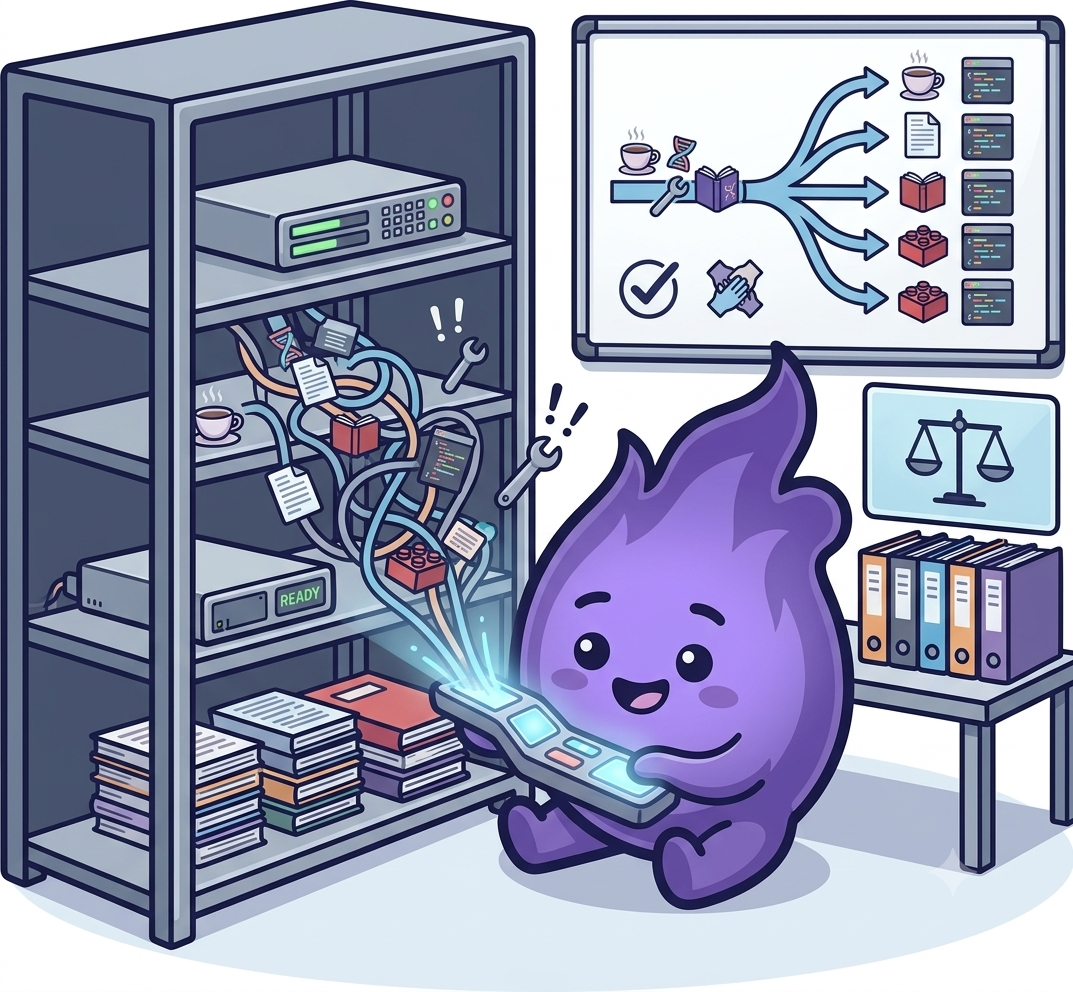
Helping sites handle digital tools without overloading them
Digital trials promise a more flexible and scalable way to run research. But they also place new demands on study sites. What used to be clipboards and binders is now portals, passwords, dashboards, and deadlines. The load has not disappeared. It has changed shape.
Some sites adjust quickly. Others struggle to keep up: not because they lack capability, but because support often assumes digital tools are self-explanatory. And the pressure to adapt quickly is frequently layered on top of teams that are already stretched. A survey of 355 investigative sites worldwide found that half viewed decentralised and digital approaches as more burdensome than traditional methods overall, not less, and that just 6.6% had ever run a fully decentralised study. That's a genuinely uneven starting point across the industry, and it's worth designing support around that reality rather than assuming everyone is roughly as comfortable as the most digitally fluent site in the network.
The readiness gap is real
Site readiness is uneven. One team might have experience running five app-based studies in the past year. Another may still rely heavily on paper documentation and shared inboxes. That variation matters enormously when introducing new tools.
A clean interface is not enough. A site coordinator already managing six protocols and two regulatory audits is unlikely to have time to explore a new dashboard with confidence. If the tool requires them to figure it out under pressure, the likely outcome is workarounds, errors, and frustration. Tellingly, the same site burden research found the type of task mattered as much as the tool itself: operational and administrative work, like scheduling or document handling, was generally seen as less burdensome when done remotely, while anything involving direct interaction with a participant was seen as more burdensome under a decentralised model. A support strategy that treats all digital tasks the same misses that distinction entirely.
What good support actually looks like
Support needs to be more than a user manual:
- A real person to contact when something breaks or does not make sense (not just a ticket queue)
- Documentation that reflects real-world workflows, not just feature descriptions
- Training that is brief, clear, and delivered at a time when the team can actually absorb it
- Recorded walkthroughs that staff can revisit later, rather than a single onboarding session they may not fully remember
Advance notice of changes also matters. When an eCRF is updated or a new feature is added to the monitoring portal, even a minor shift can cause confusion if it arrives without warning. Surprises in the middle of a visit window or data cleaning cycle are rarely welcome, and for a site that already finds parts of the digital workflow more burdensome than the version it replaced, an unannounced change removes the one thing that made the new system tolerable: predictability.
Small design decisions that make a big difference
These are often low-effort changes that significantly reduce site burden, and they map closely onto the specific pain points the burden research identified:
| Design choice | Burden it targets |
|---|---|
| Forms that hide irrelevant fields automatically | Administrative overload from screens built for every scenario at once |
| Query text that explains why a question is being raised | Confusion during participant-facing tasks, where context matters most |
| Notification settings that filter for what matters | Alert fatigue during high-volume operational periods |
| Response time expectations that are clearly communicated and consistently met | The uncertainty that makes any remote task feel heavier than it needs to |
None of these require a system overhaul. They require attention to the experience of the people actually using the tools day to day, and a willingness to accept that a task can be technically simpler while still feeling more burdensome, if nobody addressed the specific friction it introduced.
The goal is not digital fluency
Supporting sites well is not about asking them to become more comfortable with technology. It is about recognising the digital demands placed on them and designing around their realities, including the uncomfortable finding that, for a meaningful share of sites, digital hasn't yet delivered the lighter workload it promised. The work that matters most is looking after participants and collecting reliable data. Everything else is scaffolding. And scaffolding needs to hold its weight without getting in the way.