
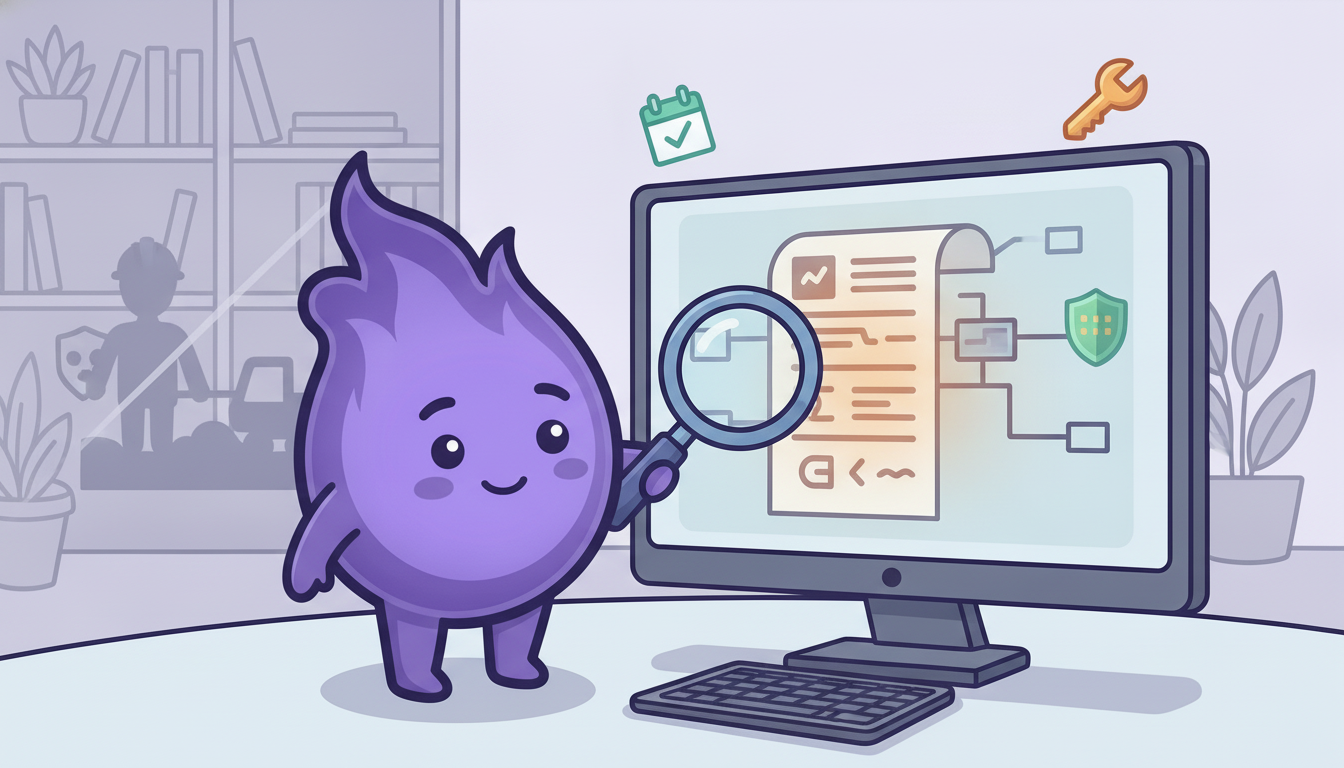
Digital source verification: what remote monitoring enables (and doesn't)
Source data verification has changed significantly as remote monitoring has become more common. Monitors no longer need to be in the room. But that does not mean everything is now possible from a distance, and the risk in this space isn't usually people arguing loudly for one extreme or the other. It's teams quietly defaulting to whatever they did on the last study, without revisiting whether that mix of remote and in-person still fits the risk profile of the one they're running now.
The evidence base for this shift is more mature than the "remote versus in-person" framing suggests. A literature review covering 22 publications on monitoring approaches found little objective evidence that traditional 100% source data verification actually produces better data integrity than reduced or remote alternatives, concluding that reduced SDV combined with centralised, risk-based monitoring is a viable and often more cost-effective path. That's not the same as saying remote monitoring can replace every function a site visit performs. It's saying the industry has spent years testing exactly where the line sits, and the answer is more nuanced than "remote is worse" or "remote is just as good."
What remote tools genuinely enable
Platforms that support direct data capture or eSource have reshaped how verification works day to day. Monitors can now:
- Review entries in real time rather than waiting for a site visit
- Flag issues directly within the electronic platform
- Log queries without printing and posting annotated forms
- Cross-check timestamps and e-signatures without requesting paper copies
This accelerates the process considerably. Data questions that once waited weeks for the next monitoring visit can often be resolved within days.
What still has limits
Remote access is not the same as full visibility. Some things cannot be replicated through a screen:
- Workflow patterns at a site: whether coordinators are entering data under pressure, in a rush, or out of sequence
- Clinical nuance that requires conversation rather than documentation review
- Paper records (certain site logs, lab notebooks, GP letters) that have not been digitised
Not every discrepancy resolves through platform access alone. Judgement, context, and direct dialogue with site teams remain part of the job, and the review above found on-site verification still had specific, documented value for exactly these kinds of gaps, particularly in catching under-reported adverse events that a purely remote review missed.
A layered approach works better than a binary one
Rather than asking "can we do all of this remotely?", the more useful question is "what does each layer of verification require?"
- Platform alerts catch missing fields, out-of-range values, and logic breaks automatically
- Regular remote review covers key data points on a frequent schedule, not just before visits
- Scheduled calls or video check-ins address context, workflow concerns, and anything the data alone cannot answer
- On-site verification where genuinely needed, for documents or situations that require being there
Spreading effort across time rather than concentrating it at visit moments tends to surface issues earlier and create less disruption for sites. It's also a more accurate reflection of what the underlying research actually supports: not a single verified "right" monitoring model, but a stack of layers, each doing the job it's genuinely suited to.
System design matters here too
The tools being used either support this approach or undermine it:
- Audit trails with clear timestamps make remote review meaningful
- Access logs and role-based permissions support accountability
- Forms with validation logic reduce conflicting entries at the point of capture
On the other side, systems without version history, platforms using shared login credentials, and exports that strip metadata all make remote verification harder than it needs to be.
Effective remote source verification is about reimagining the flow of information, not just replicating what site visits used to do through a screen, and about being honest with yourself about which specific layer of oversight a given risk actually needs.
That honesty is worth revisiting at defined points in a study, not just at the design stage. A monitoring plan built assuming a certain level of site experience or data quality can quietly become the wrong plan six months in, once real performance data exists to check the original assumptions against. Treating the monitoring mix as a fixed decision made once, rather than a working hypothesis to be tested against actual results, is one of the more common ways studies end up over-monitoring the wrong sites and under-monitoring the ones that actually needed the attention.